
Obama Presidential Center Museum
“Jeremy’s attention to detail and technical expertise made him an integral collaborator in realizing our creative vision, always bringing solutions, thoughtful flourishes, and an impassioned enthusiasm to this intricate and singular project. ”
Sound Design Jeremy S. Bloom
Audio Editors Elliot Lowe & Morgan Volk
Mix Techs Alex Stewart, Chaim Goodman
Client Barack Obama Foundation
Media Lead Batwin + Robin Productions
Exhibit Design Ralph Appelbaum Associates
Acoustics SHAcoustics
Av Integration BBI Engineering
Mix Facility Harbor Picture Company
Music Clearence Searchworks & Loudspeaker Music Group
Stock Music APM Music
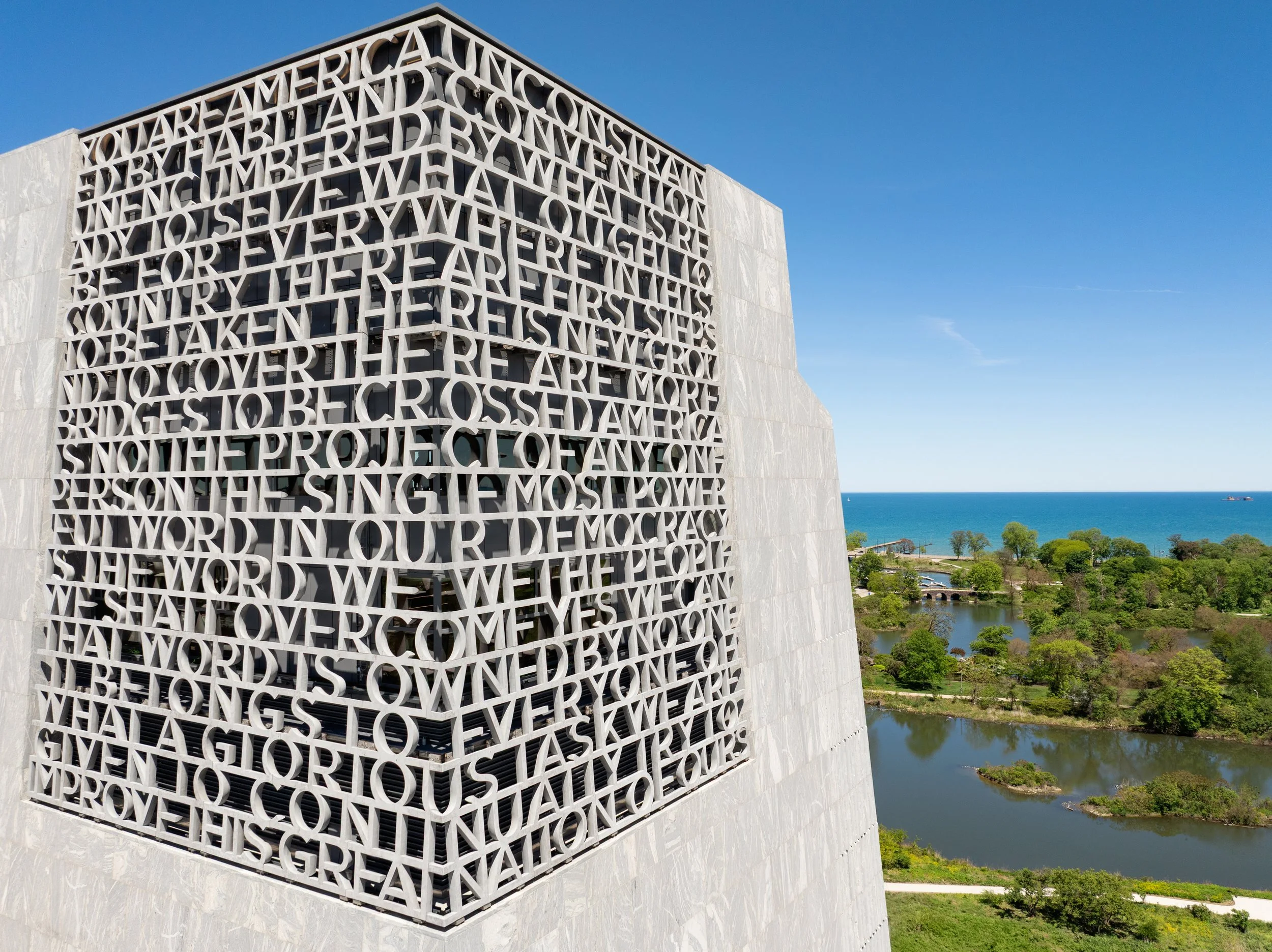
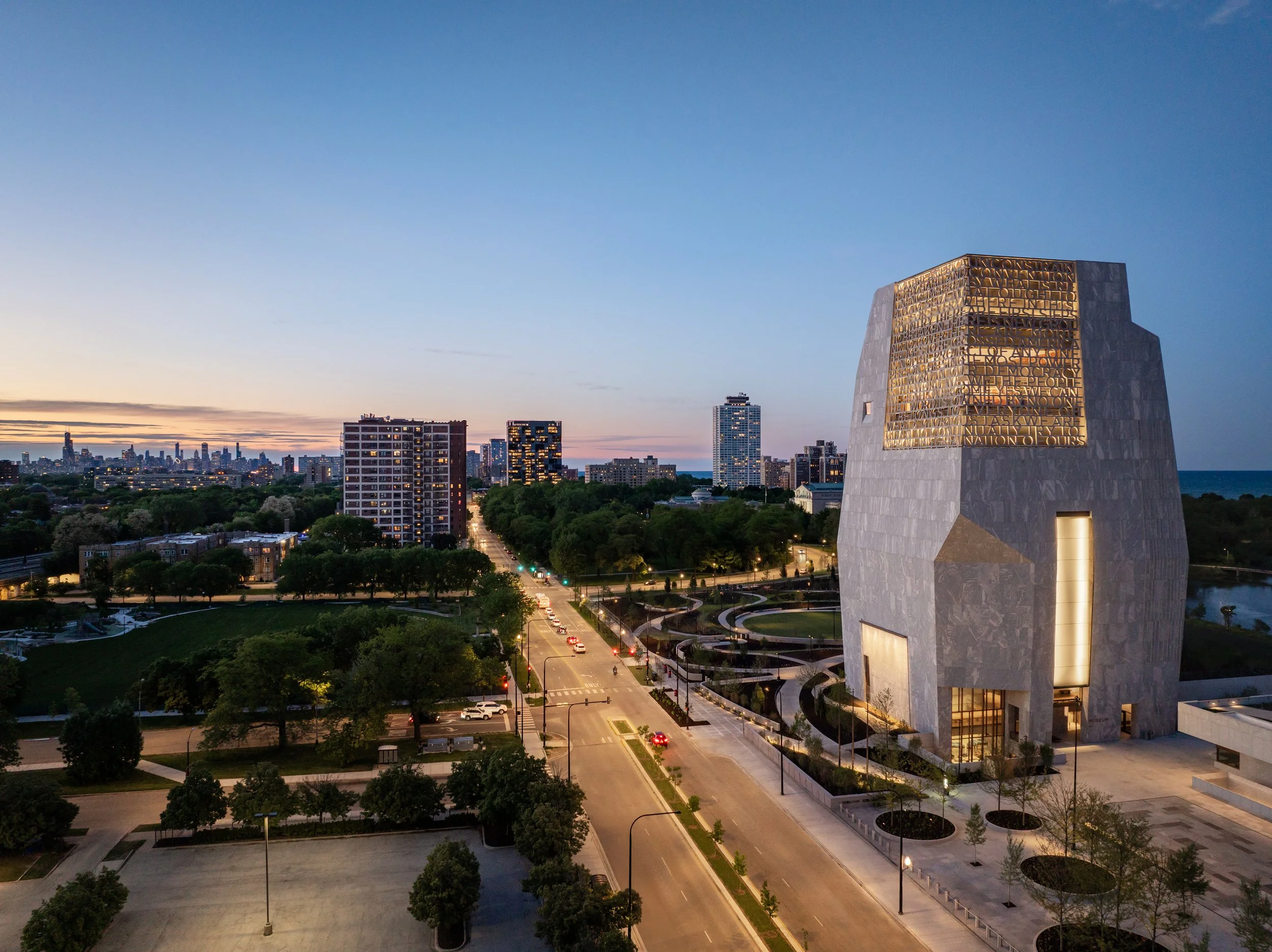
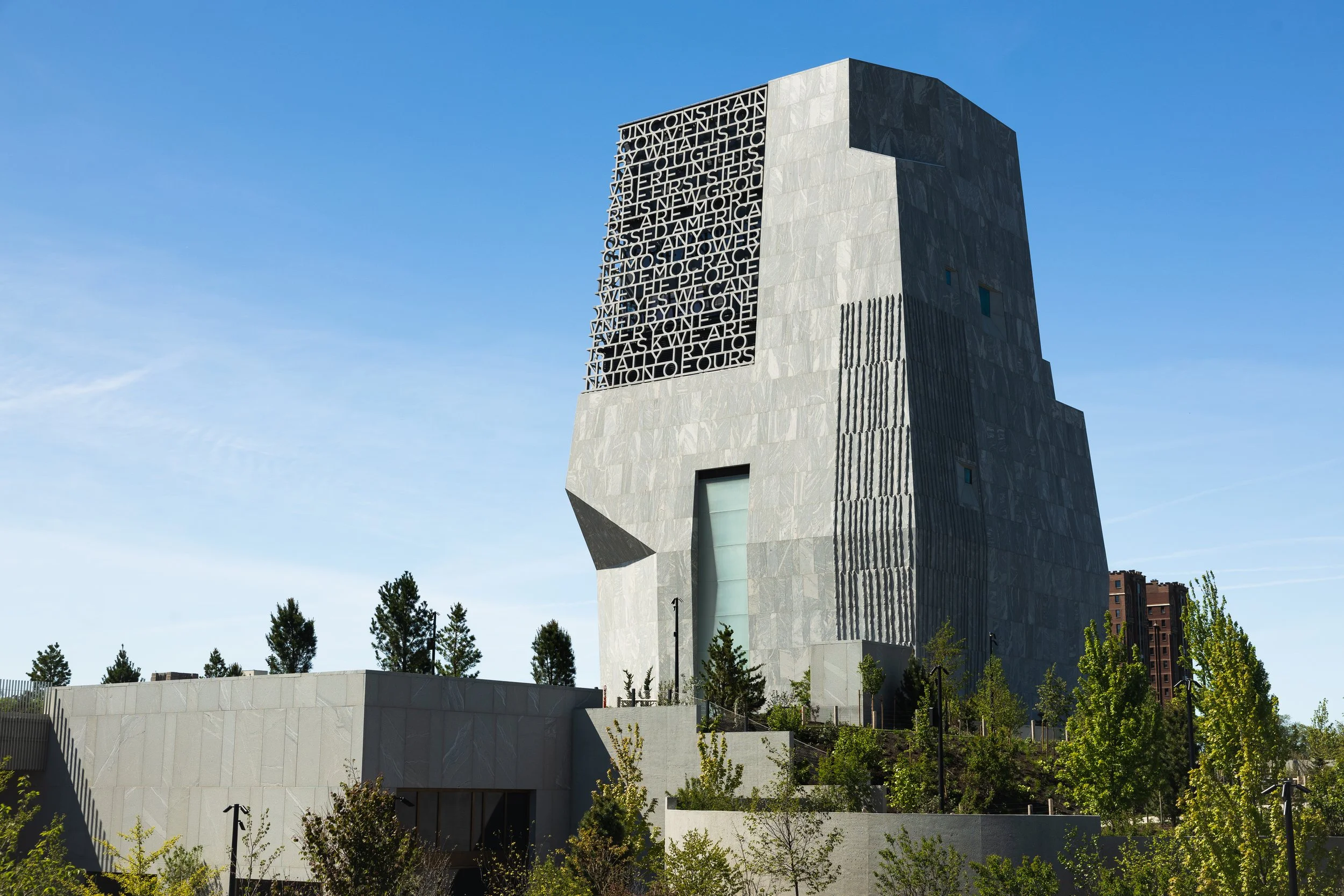
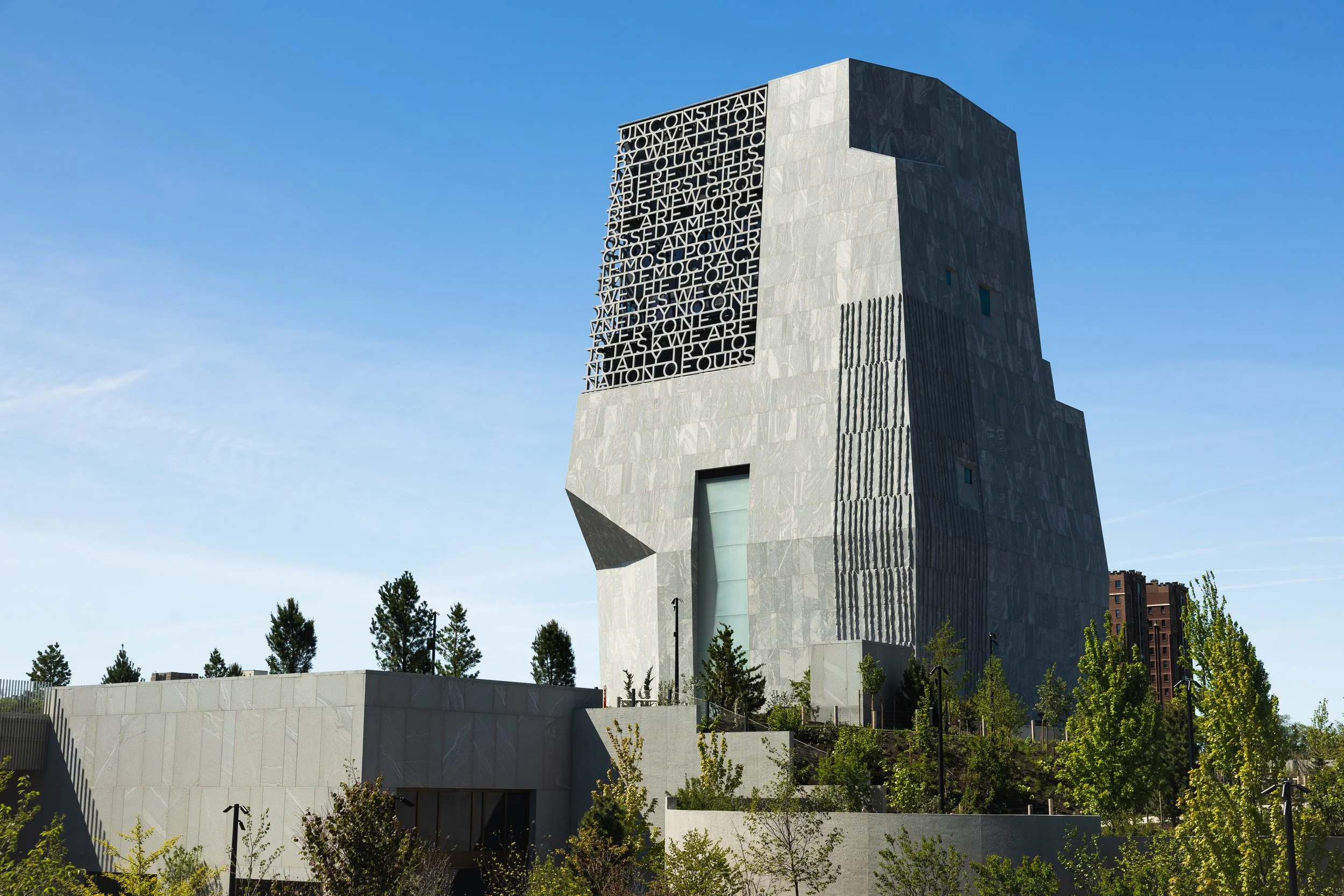
The Obama Presidential Center Museum explores the promise and power of democracy through the legacy of President and Mrs. Obama. Journey through four levels of dynamic exhibits that tell the story of the First Family and the social movements that made their work possible. Exhibits include memorabilia from the Obamas’ time in the White House, stories of iconic moments from the President’s administration, and interactive activities for visitors of all ages and abilities.
The Approach
The Obama Presidential Center Museum is unlike any project we have taken on: Forty exhibits across four floors, ranging from an 88-foot tall projection, to a replica of the Oval Office. Each with its own story, acoustic environment, technical implementation, and creative goals. Designing sound for a project like OPCM doesn't encompass a single sonic discipline, it embodies all of them at once.
From the moment visitors enter the museum, sound affects their experience. That effect doesn't happen by accident. It's the result of years of planning, creative collaboration, and a careful attention to detail.
Designing soundscapes for a presidential museum requires rigor and every sound needs to earn its place. The museum depicts multiple eras, places, and moments. Our commitment throughout the design process was that every element be rooted in research and authentic archival material when available: real recordings, voices, and music from the events and periods being portrayed.
The museum’s audio tracks are largely constructed from authentic sounds and voices of the Obama presidency, drawn from the Obama Presidential Library and National Archives and Records Administration’s extraordinary media archives, carefully catalogued and tagged for use in our final compositions.
A project like the Obama Presidential Center Museum involves a vast web of collaborators. Each team brings legitimate expertise and authority over different parts of the experience.
We model our role in this structure similarly to the supervising sound editor of a film, but the analogy only goes so far. We are not only leading the sonic vision and execution of the exhibit media, but also working to constantly translate between creative and technical disciplines for our partners.
That role draws on a background that spans the spatial work of theatrical sound design, the archival workflows of documentary film, the speed and precision of commercial audio, and finally the responsibility of radio journalism where sound alone must carry complex ideas without visual support. Each discipline contributes a different language. The Obama Presidential Center Museum required them all.
Panorama of a Presidency
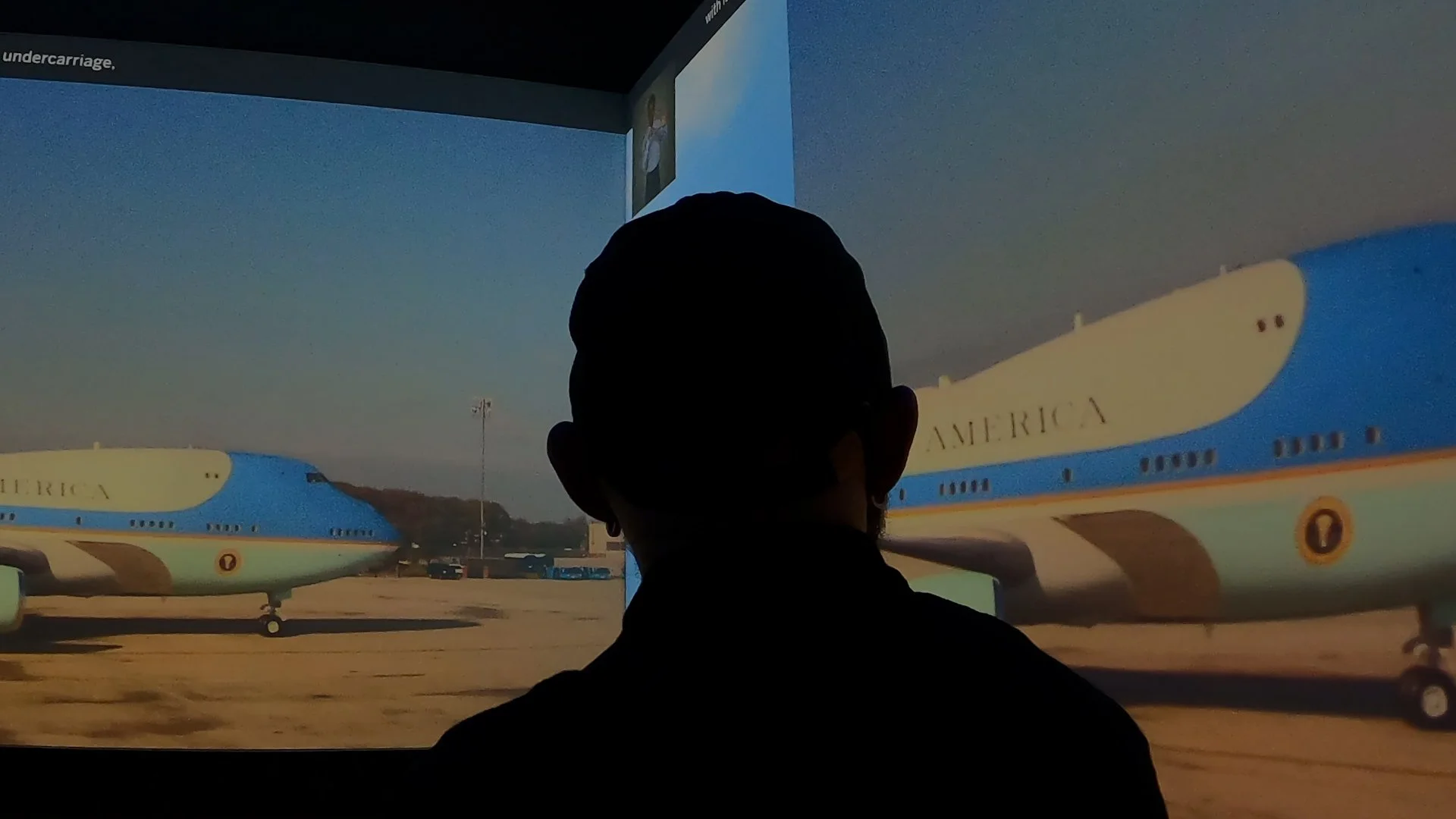
Panorama of a Presidency places the visitor at the center of a fully immersive sonic and visual environment: a portrait of the Obama years that moves around the space in every direction.
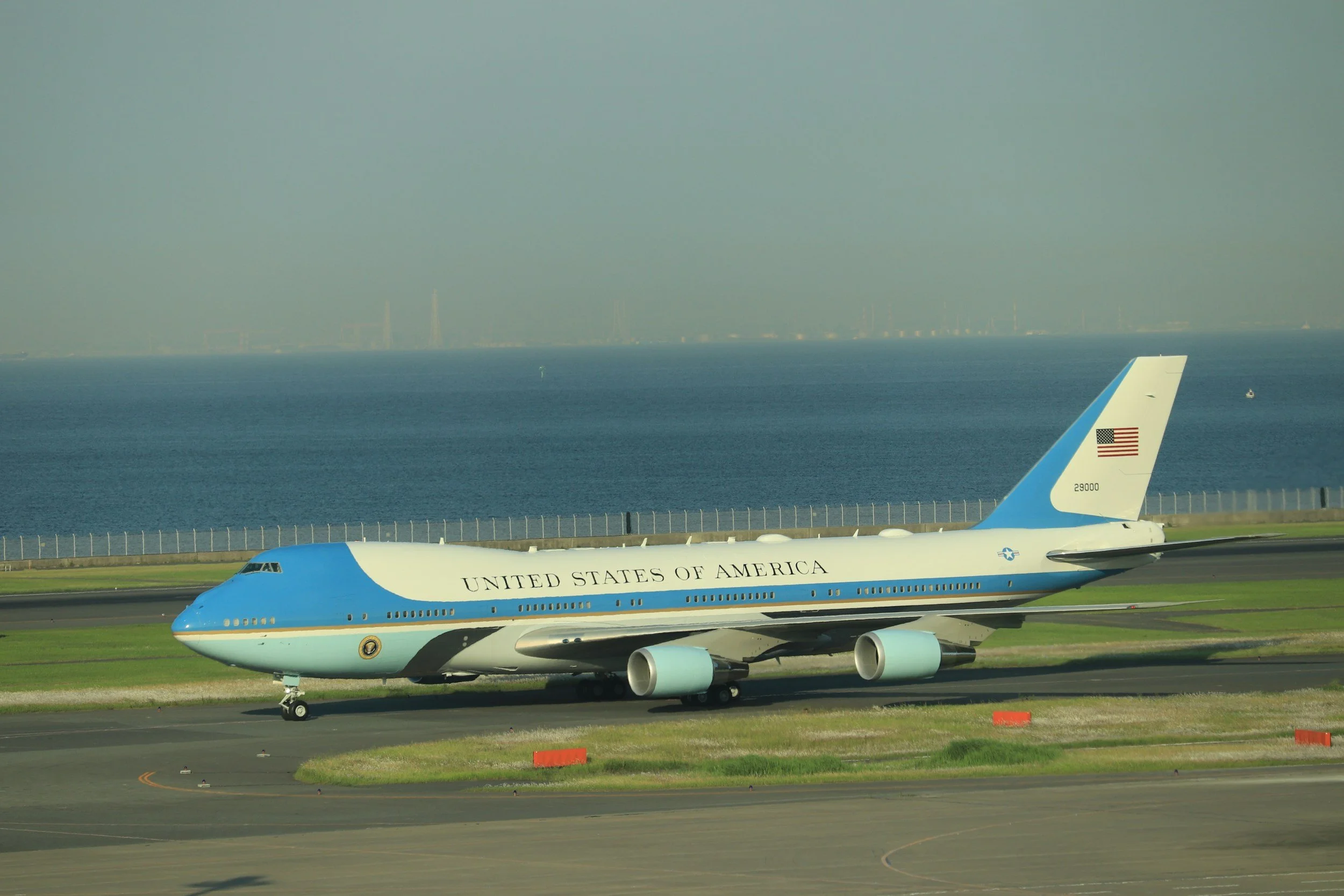
Building its soundscapes required some of the most detailed archival research of the entire project. We researched the specific aircraft used during the Obama administration to ensure accuracy as Marine One and Airforce One fly overhead. For the White House Situation Room, we located a rare public video tour from the Obama era allowing us to ensure that even the ringing of the telephones was accurate to the period.
What makes this immersive format so powerful is the ability to let those sounds move and naturally surround the guest. A recording of Air Force One flies by from a distance, passing overhead. The sound of President Obama playing basketball with his friends travels around the room is if listeners were right on the court hearing the squeak of sneakers, the swish of the net, and players voices calling out from across the room. These are details many visitors will never consciously register, but will be felt as an incredibly natural sounding experience.
The Power of Words
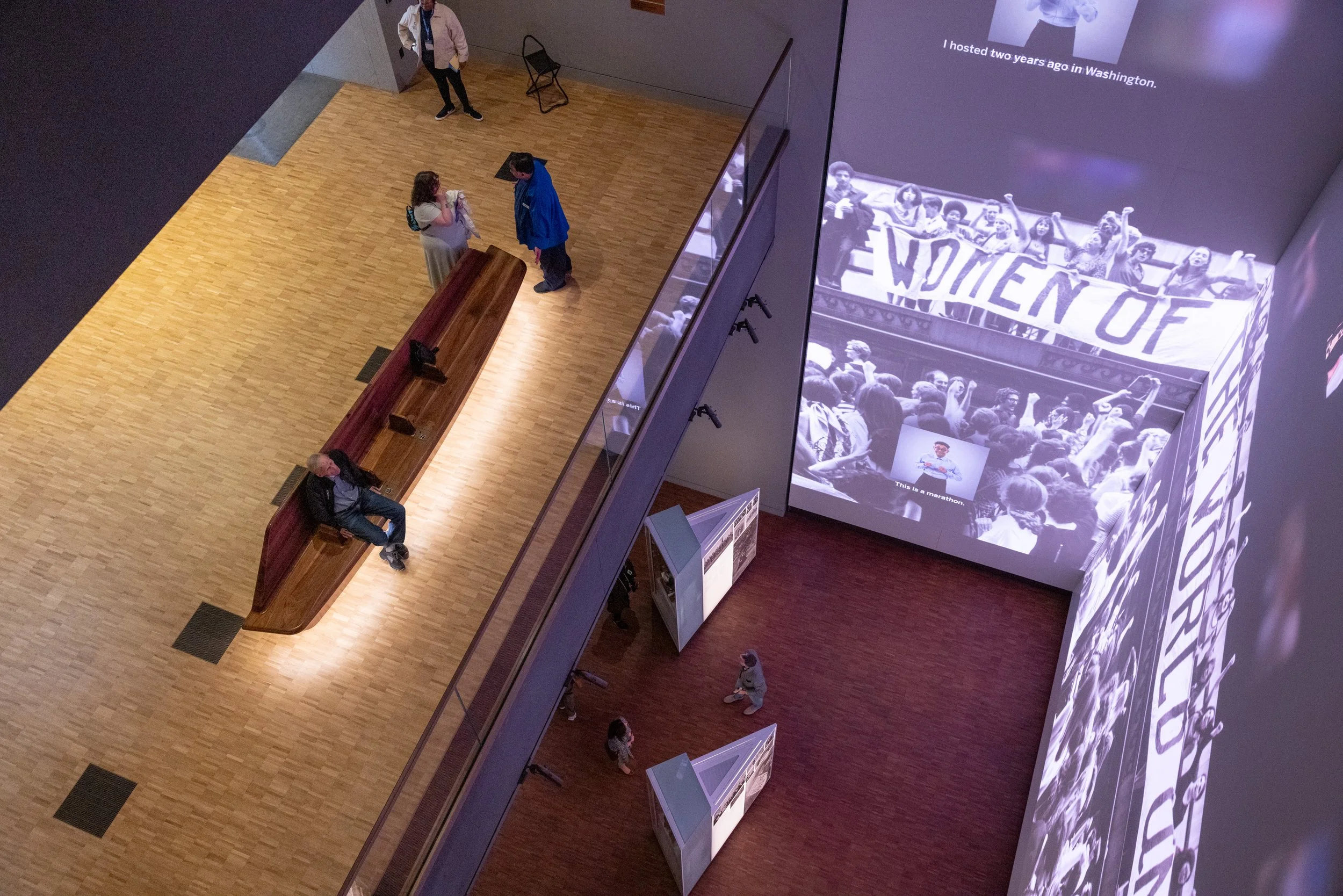
The cinematic Power of Words exhibit is the museum’s largest and most technically ambitious audio-visual installation. Eighty speakers line an 88-foot vertical span across four floors, carefully tuned by SHAcoustics to deliver both cinematic power and floor-by-floor isolation when needed. The system needed to support two full cinematic takeover films, level-specific intro films, dynamically graphic call-to-action sequences, and ambient art takeovers simultaneously with different content variations on different floors.
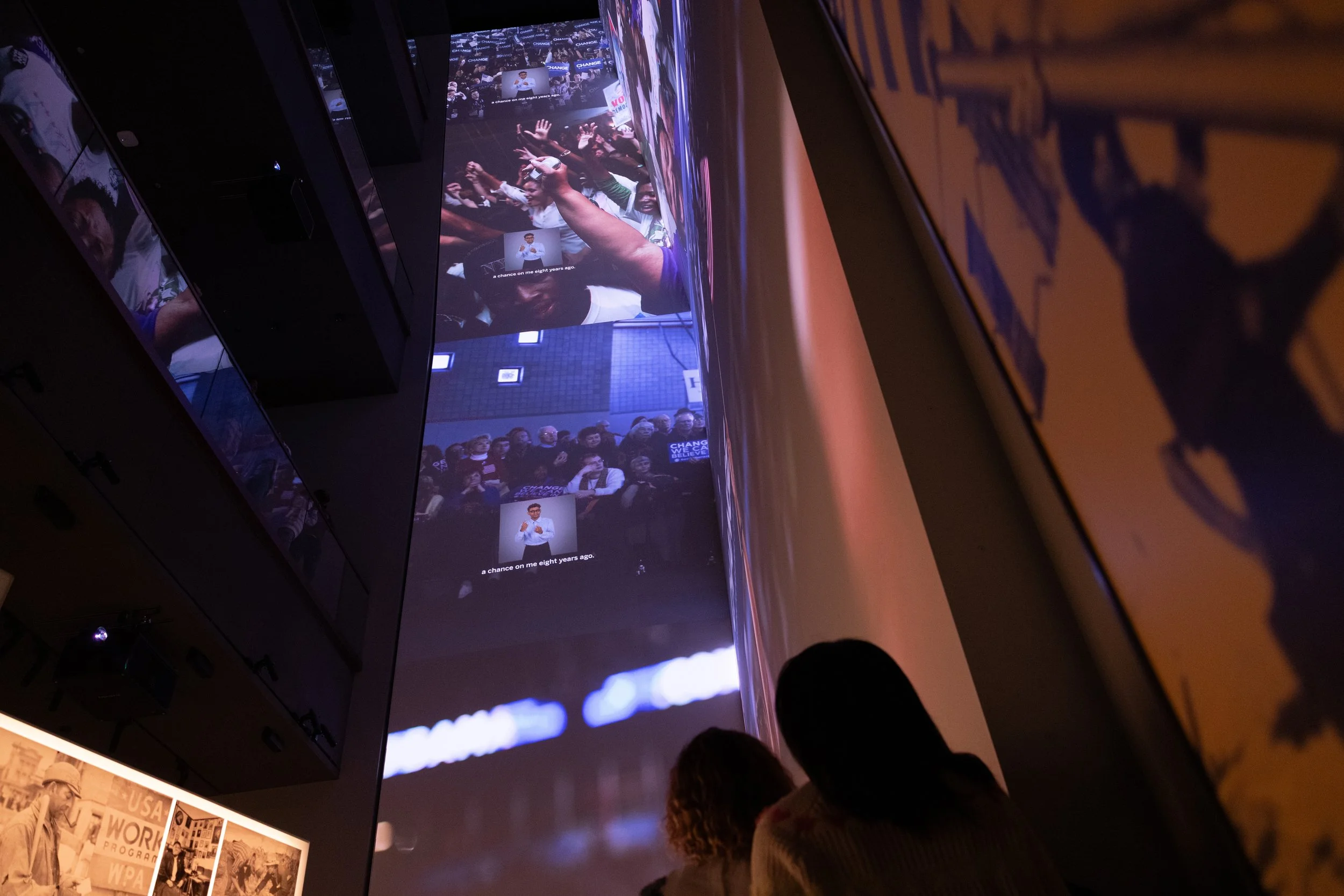
The central risk is musical. If adjacent floors play different music at the same time, any residual bleed between levels creates clashes audible enough to pull visitors out of the experience. Our solution was to advocate for a holistic approach: even segments delivering different narratives to different floors share a musical score, so that any bleed between levels remains consonant. Unified music masks the differences in dialog between floors rather than competing with it.
While some segments require maximum containment, others require a more cinematic, unified approach felt across all four floors simultaneously. We collaborated with our technical partners on a routing and distribution strategy that delivers both as needed. The exhibit has two global inputs feeding every floor simultaneously: one for shared voiceover, and one for low-frequency bass content. Meanwhile, each floor has dedicated inputs localizing archival material, music, and sound effects to specific screen positions using beam-steered arrays and time-aligned floor speakers. This 17 input approach provides a balance between complexity and efficiency when mixing across the exhibit’s 80 loudspeakers.
To upmix mono archival audio recorded in real environments, the non-destructive noise reduction tool Hush allowed us to isolate the layers of natural reverb, background sound, and voice. This was used not to remove background sounds, but to redistribute them throughout the space, allowing primary voices to come from center speakers while ambiences and room acoustics spread to surround the guest. For speeches recorded on outdoor PA systems we used Cargocult Slapper to recreate the acoustics of large outdoor environments on our multichannel sound systems.
Music of the People
The intentionality of the museum's archival curation extends to music selection across the museum. To anchor and unify the museum’s musical soundtracks, we led a moodboarding process. A curated library of production music cues, sourced through APM Music and categorized by era and tone, was assembled and shared with media production partners across the museum. We consciously steered away from music that felt regal or traditionally presidential, or sonic shorthands that signal visitors how to feel rather than letting them feel it.
As the media concepts developed across the museum, a theme emerged organically: How could music reinforce a pluralistic, human quality, with many voices coming together as one? This idea manifests throughout the exhibits, as a gospel choir swelling from Power of Words, or the percussion of many hands clapping together polyrhythmicaly to provide momentum depicting the energy of the Obama election campaigns.
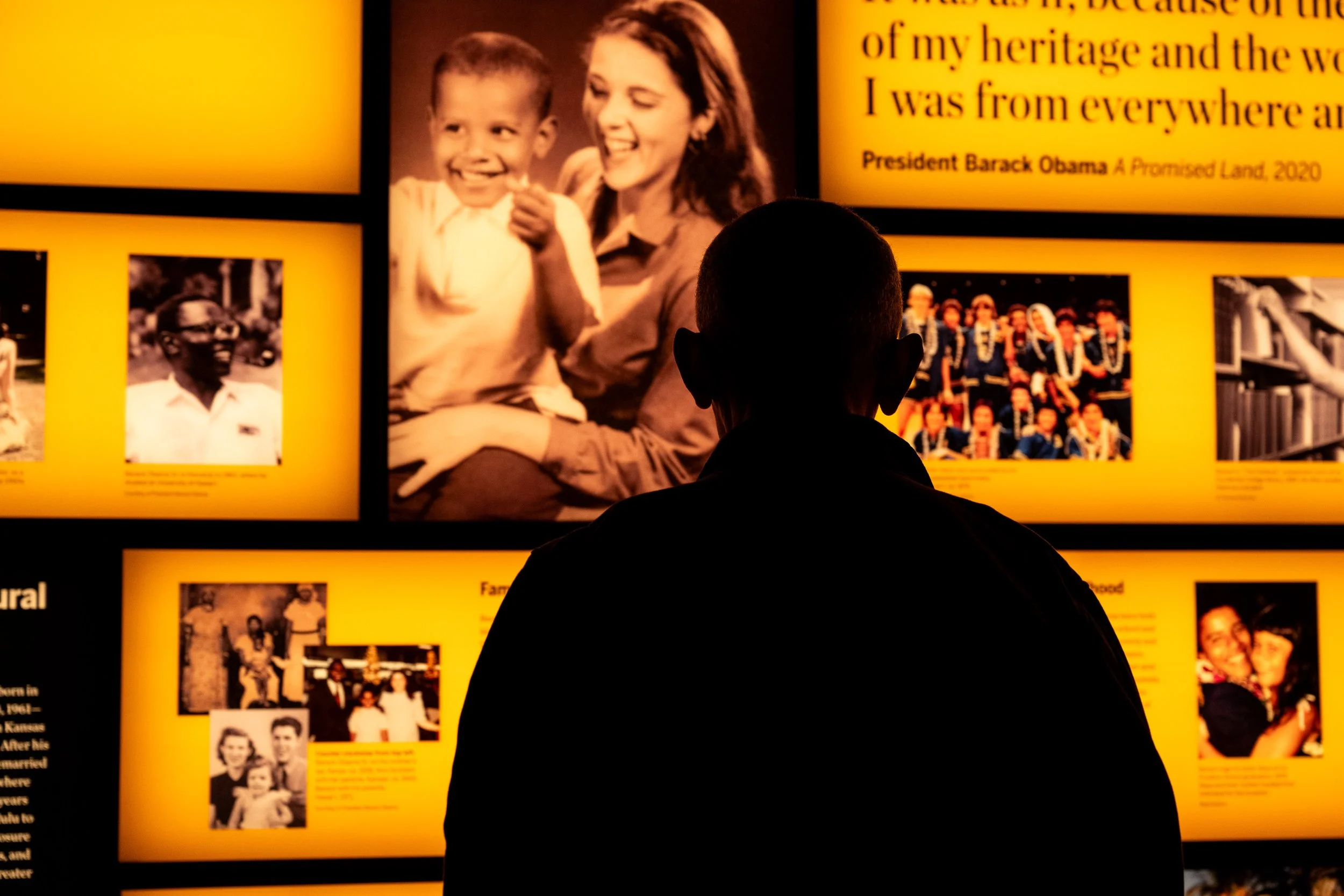
The Obama era had its own musical DNA, nowhere more evident than in the exhibit “Changing Nation, Changing World,” a mashup of President Obama’s favorite tracks. The piece required the technical dexterity of a music editor and the sensibility of a DJ, drawing on Jeremy’s experience editing music for Radiolab, documentaries like "STAX: Soulsville USA," and projects featuring artists including Lady Gaga, Tony Bennett, Yo-Yo Ma, and BlackPink. Working in Ableton Live, we deconstructed and intertwined Obama’s favorite tracks to create a seamless musical tapestry.
The finished piece earned perhaps the most meaningful feedback of our time on the project. When it was finally time for President Obama to review the museum's finished media, he stood in front of the soundscape and began dancing.
Soundscapes
The Oval Office
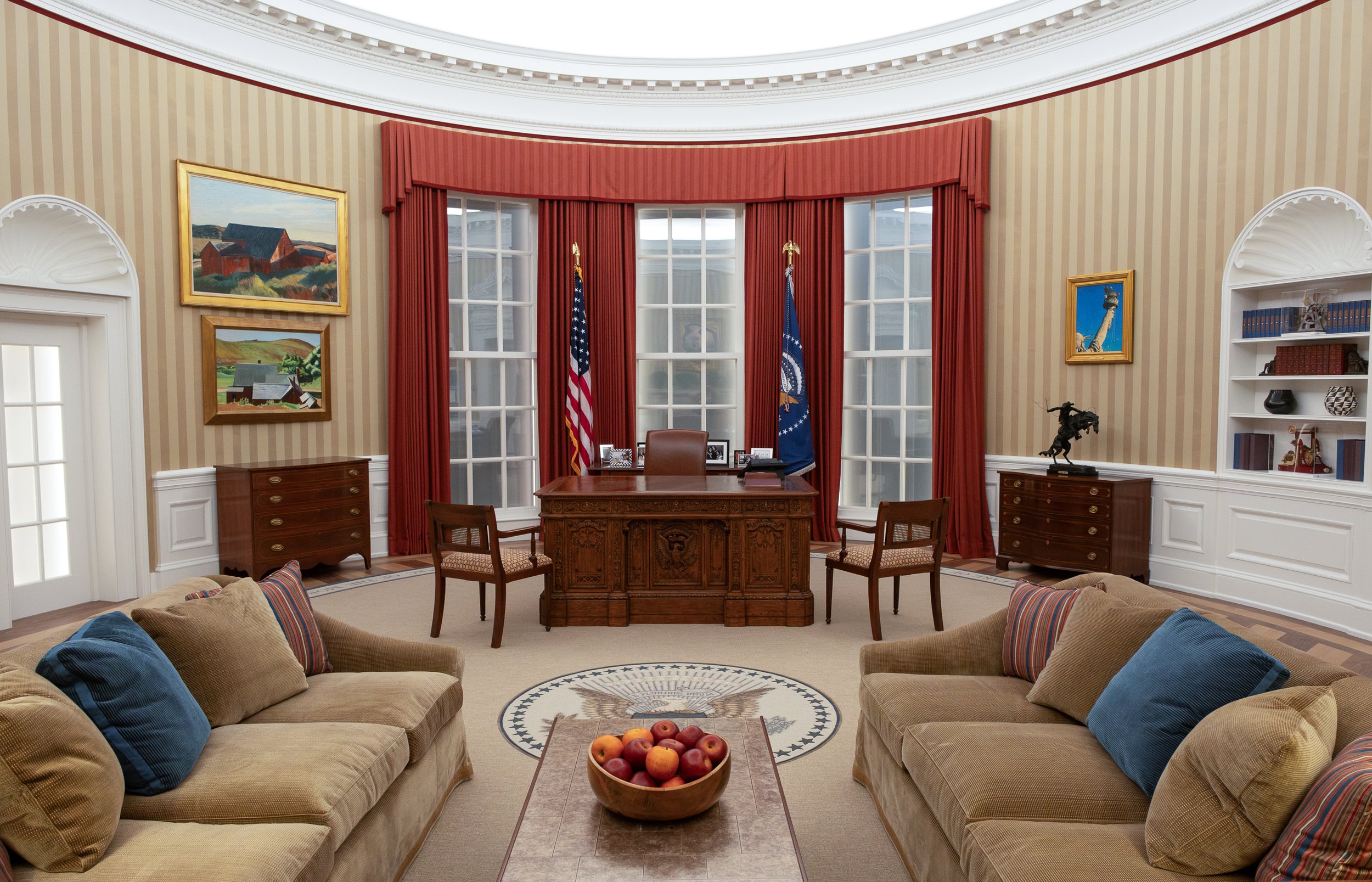
The museum includes a full-size replica of the Oval Office as it appeared during the Obama administration. Our first question was simple: What defines the sound of the Oval Office?
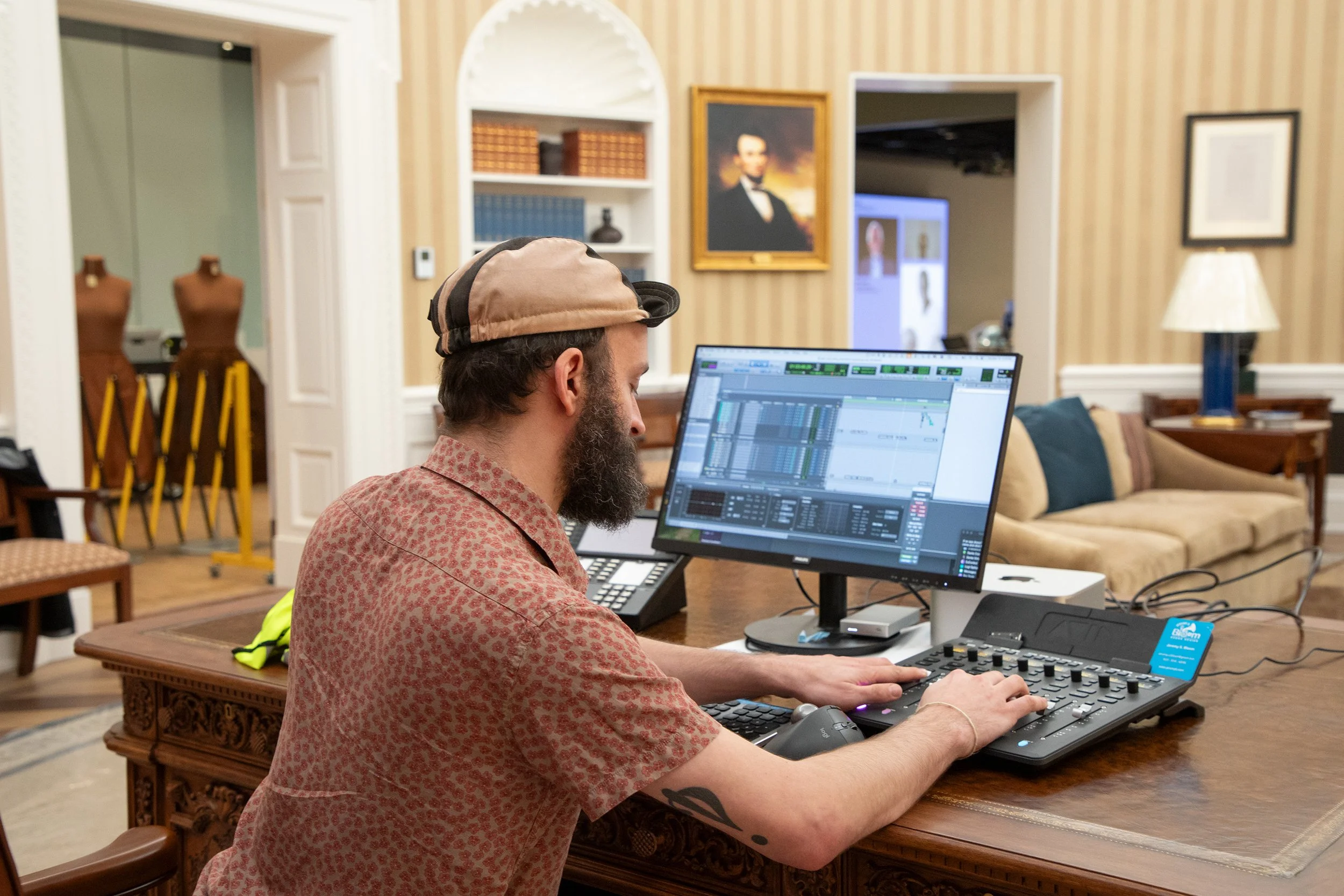
The answer came from the archives. We watched through every publicly available recording of Obama greeting foreign leaders, everyday visitors, and the press in the Oval Office. What emerged was that the room’s most distinctive sounds aren’t in moments of formality. They’re in the margins: The hustle of the entering press. The clicks and whirs of camera shutters. The familiar cadence of Barack and Michelle Obama saying hello or thanking their guests. All of this material was catalogued and tagged in Soundminer, a professional audio database.
From this catalog, we composed a sonic collage of source media that places the visitor inside those moments without ever anchoring them to a specific dignitary or event. You will never hear anyone’s name uttered. The piece is hyper-specific to the room and its typical life, and yet universal to the full span of eight years.
The Rose Garden
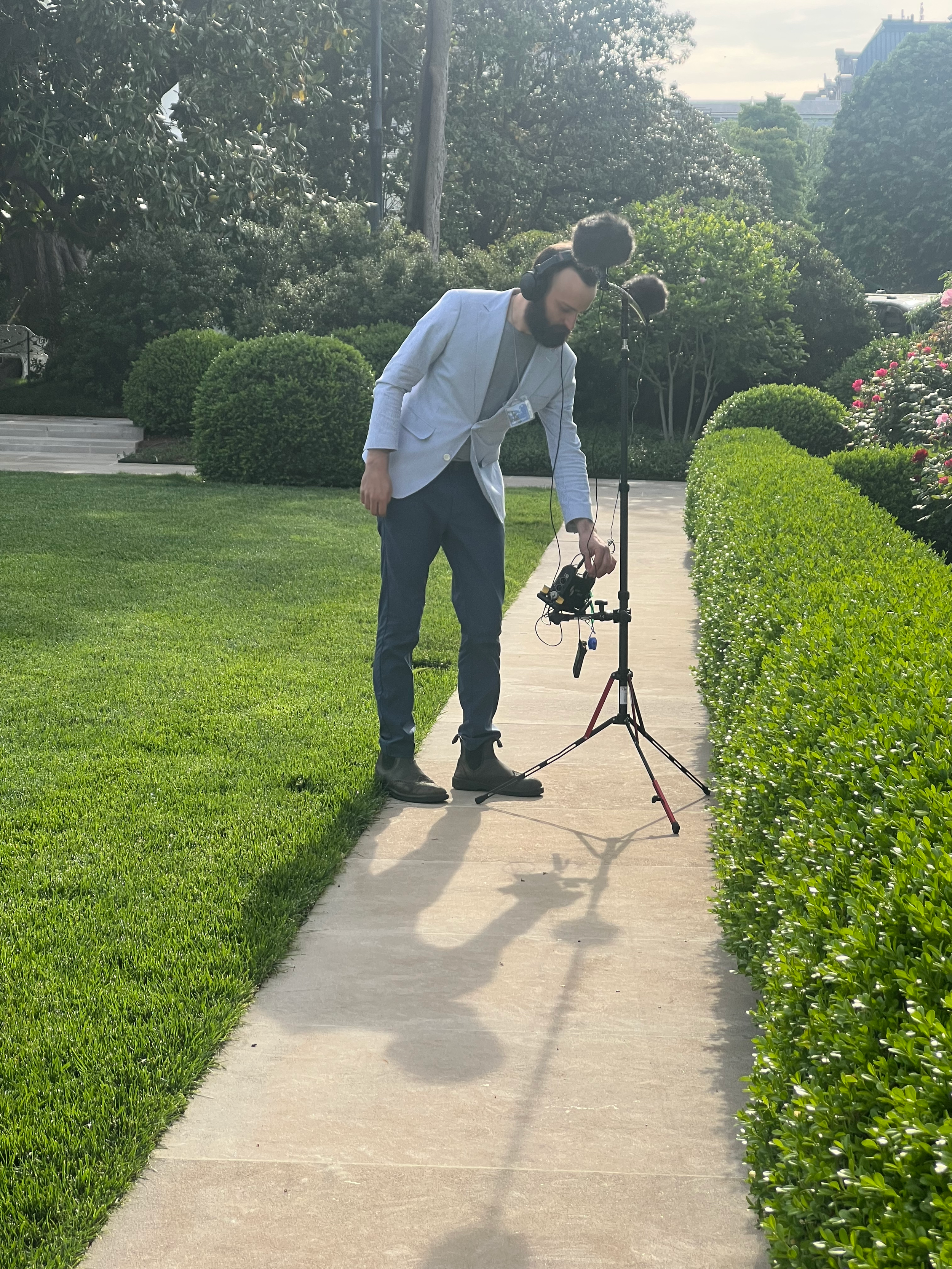
For the museum’s Rose Garden Soundscape and other exhibits featuring this iconic courtyard, Jeremy traveled to Washington D.C. in 2024 to record the actual White House Rose Garden. The recording setup was deliberately lightweight: a professionally transparent rig capable of capturing the space in full fidelity.
What we found there surprised us. The layers of security and landscaping surrounding the White House grounds create a sonic perimeter that filters out much of the city. Inside, the din of Washington fades away and is replaced by something unexpectedly lush: birdsong, rustling foliage, and the quiet of a protected urban garden. But for a distant ambulance, the city barely intrudes. The material we brought back appears in several exhibits around the museum.
From Studio to Site
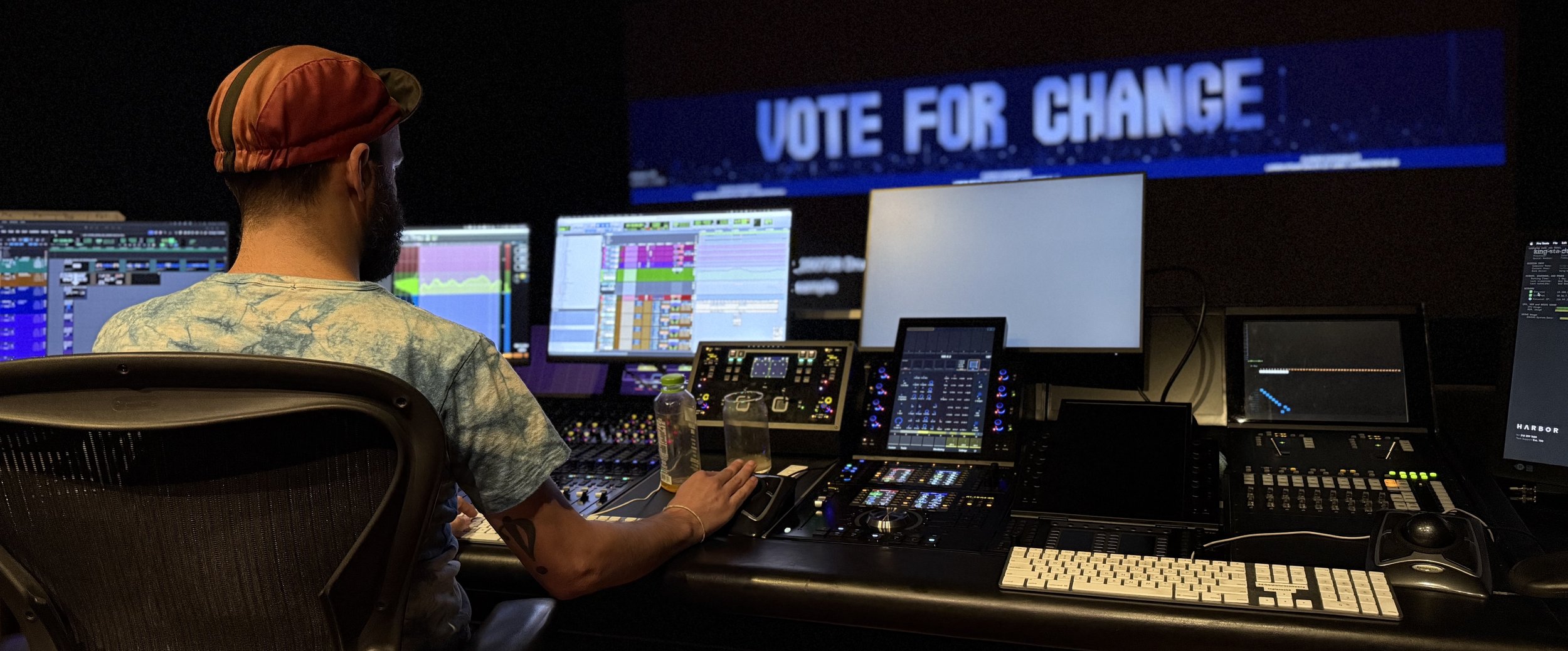
For a museum of this complexity, getting the mix right before arriving onsite is crucial. Key large scale exhibits were mixed at Harbor Picture Company, a premier post-production facility in New York City. Harbor offered Dolby-certified rooms of different scales matched to each exhibit: Power of Words was mixed at Harbor Grand, a large theatrical stage commensurate with the exhibit’s size. Medium-scale exhibits like Yes We Can or Panorama of a Presidency were mixed in smaller rooms, allowing us to allocate our budget wisely without sacrificing quality. Very small media pieces did not require studio work at all and could be mixed in nearfield from our own facilities.
The value of this studio phase goes beyond the quality of the mix itself. Remote reviews, where clients listen on different equipment in different rooms, can skew perception. At Harbor, the entire team gathered in a shared listening environment and the collaboration was rooted in the same experience. Creative decisions could be made together, with confidence, before anyone set foot in the museum.
By the time we arrive onsite, the mix is in its ideal form. What happens next is a site-specific final session, adapting that ideal to the realities of the space, its acoustics, and its sound system. Once all exhibits are installed and can be heard together for the first time, we turn our attention to how everything works cohesively as a complete experience.
All Together: Music in Space
“We saw an opportunity to create a piece of music which takes place largely in space rather than time. As the guest moves around they experience different aspects of the piece, like moving through a sonic ecology.”
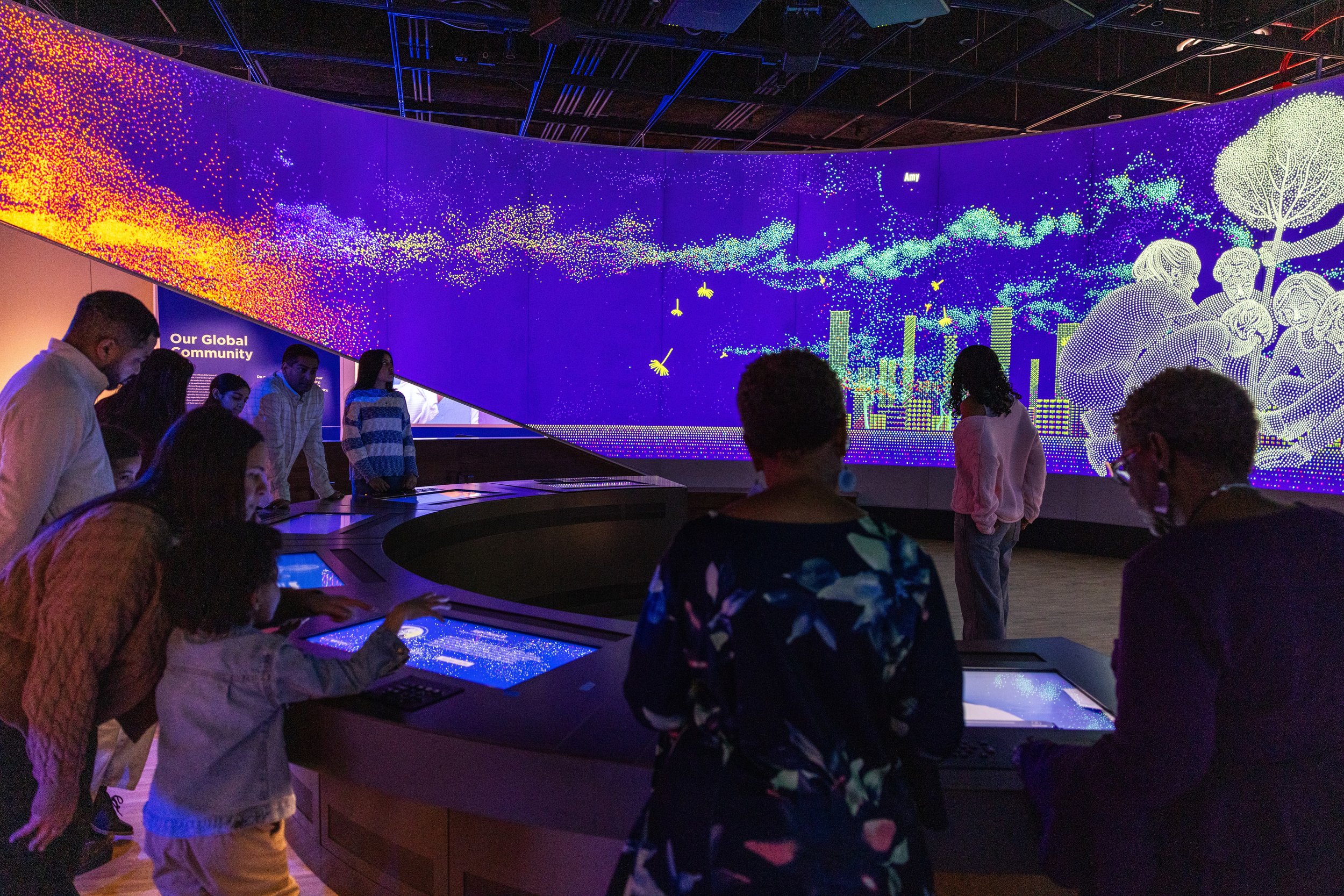
“All Together” is a digital illustrated installation by artist Jules Julien, working with Cortina Productions, that presents millions of moving dots forming different figures and imagery. The challenge of scoring it revealed something fundamental about what museum music can be.
Before our involvement, the team explored licensing existing works from recognized composers or stock music. The problem was not the quality of the music, it was that music built for listening is linear… it has a beginning, a middle, and an end. In a room where visitors wander through on their own time, that structure undermines the experience rather than supporting it.
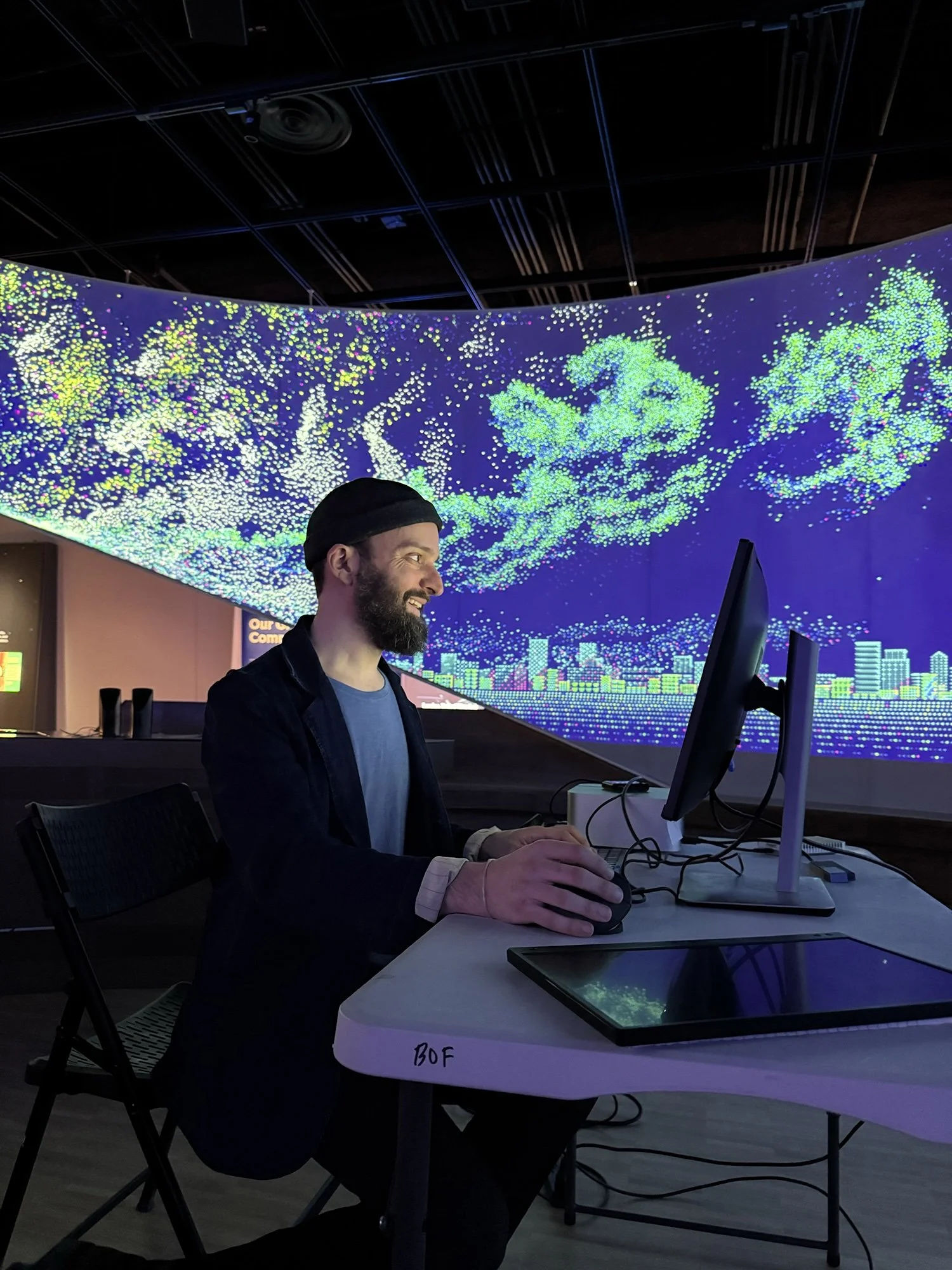
The room has approximately twelve speakers, each assigned a different musical voice. Walking through the space, the visitor is surrounded by a lush, abstract soundscape that shifts based on where they stand. The composition reveals itself through movement rather than duration. Julien’s layers of drifting particles, which shift and breathe as the viewer’s perspective changes, directly shaped how the musical layers were structured.
Virtual instruments voice the soft, wooden sounds of resonant percussion. To create the perception that these sounds are constantly expanding and contracting in density in sympathy with Julien’s visual rhythms, we turned to a semi-generative approach using custom Max-for-Live programming. The challenge was to set rules and constraints that produced the variation the piece needed while keeping every iteration beautiful. Once the compositional logic was established, all audio was rendered out as fixed files for playback onsite ensuring rock-solid reliability for years of daily operation.
While virtual instruments offered precision and control, but they also exposed a limitation: They lack the subtle imperfections and organic unpredictability that Julien’s deeply human concept demanded. To solve this, we traveled to the Catskills to record vocalist Eva Salina. Salina, who has spent her career studying traditional Balkan vocal music, brought melismatic subtlety a human element which the piece needed. The resulting recordings were chopped into phrases and loaded into a sampler in Ableton Live. These curated fragments are played back stochastically so the composition always feels fresh, never identical in any two moments.
Opening Day
Before the museum opened to the public, we walked through the museum with President Obama as he viewed, and listened, to every media piece pausing to reflect and make final adjustments.
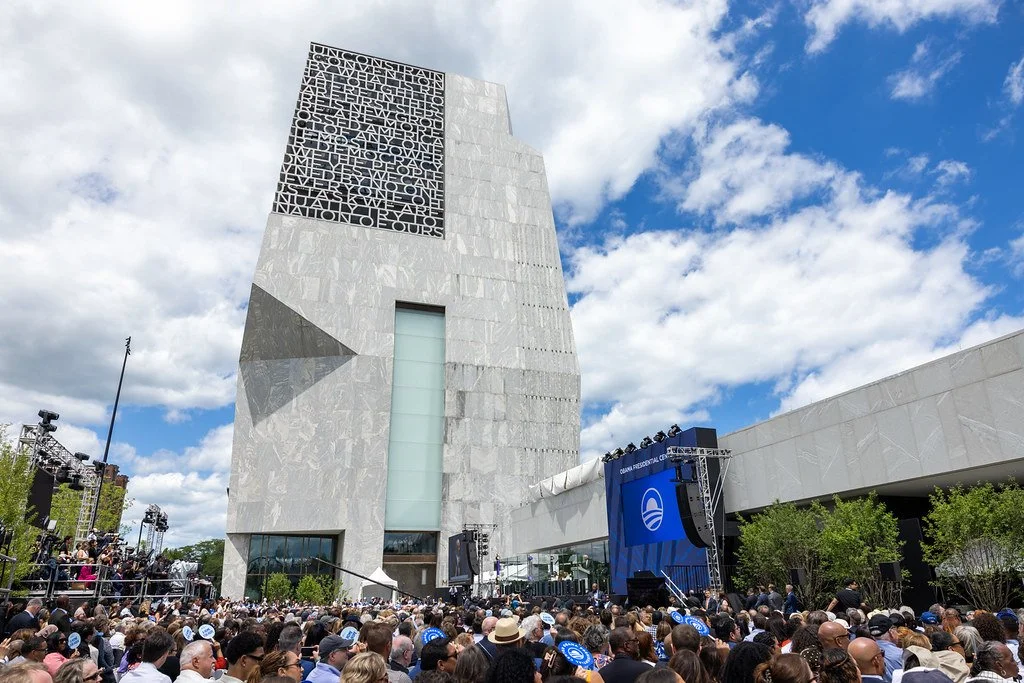
Just a month later, thousands of people walked through the same doors. Families, students, Chicagoans, visitors from across the country, each finding their own relationship to a space years in the making. Some gazed up the height of Power of Words. Some walked through the exhibits depicting the Rose Garden or Oval Office. Others paused for reflection surrounded by Jules Julien's drifting particles.
Most of them will never think about the sound. They won't notice the archival recordings woven into the walls of the Oval Office, the way the music of Power of Words holds together across four floors, or the composition that expands and contracts around them in “All Together.” But they will feel it. They’ll feel the way it makes them think more deeply, or catch their breath, or stay a little longer than they planned. That's what intentionally designed sound does, and what we bring to every project.
All imagery courtesy of the Barack Obama Foundation